Pulsers make fusion practical

Fusion — the same process that powers the stars — works by compressing hydrogen atoms with such speed and force that they fuse and release energy.

In 2022, the National Ignition Facility achieved fusion ignition for the first time, proving the conditions required. NIF used laser-driven inertial confinement fusion, a method built for research, not commercial power.

We're building on that breakthrough with pulser fusion. Instead of lasers, we use powerful electrical pulses to more efficiently compress hydrogen atoms to the conditions needed for fusion.

A new generation of pulsed power

Our system is powered by the Impedance-Matched Marx Generator, a next-generation pulser co-invented by our CTO and co-founder, Keith LeChien.

Our pulser modules advance on decades of pulsed-power technology, including the Marx Generators used by the Z Machine at Sandia National Labs.
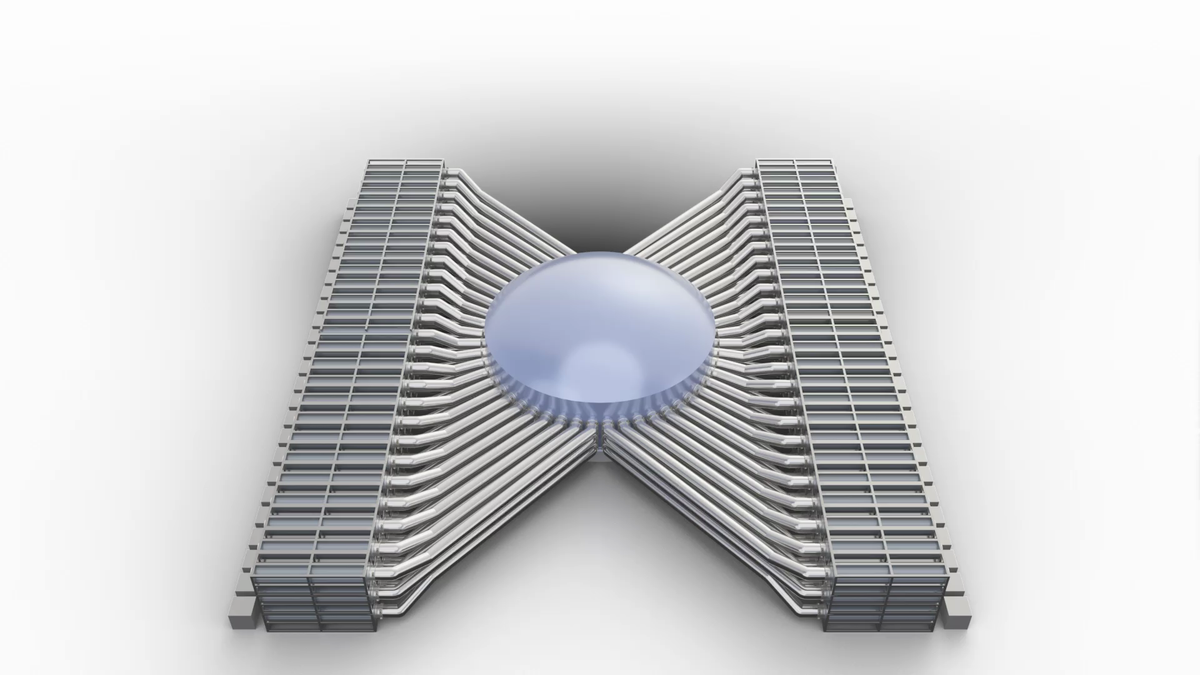
  1. A complete fusion system made of 156 pulser modules comes into view.

    Our fusion system consists of 156 pulser modules, a central fusion chamber, and a fusion target the size of a pencil eraser.

  2. Pulsars are joined together to create a complete module.

    The pulser modules store electrical energy and release it in fast pulses.

  3. Modules are charging.

    Capacitors charge.

  4. Energy being discharged from modules and traveling down tubes.

    Capacitors discharge, efficiently delivering their stored energy through the modules.

  5. Energy completes its journey through the pulse tubes.

    Energy travels through modules and then pulse tubes toward the fusion chamber.

  6. Energy pulses converge on the target.

    Energy from many transmission lines is coupled into two electrodes, which drive current through the target, electromagnetically compressing it in less than 100 billionths of a second.

  7. Helium atoms.

    Hydrogen atoms fuse into (heavier) helium atoms, releasing energy.

Number of repeating stages in a complete pulser module
Small enough to fit in a shipping container
ns
How fast our pulser modules discharge
A million times faster than the blink of an eye
> TW
Peak power delivered during each 100ns pulser module discharge
More than double the average power demand of the entire U.S.
Number of pulser modules in Pacific Fusion’s Demonstration System
Sufficient to create fusion conditions